Visar inlägg med etikett Gardening - Shrubs. Visa alla inlägg

onsdag 10 juni 2020

Red Grape- Vitis vin. 'Zilga'

This grape is supposedly extra hardy. Let us see if it works out in my little garden. This is the third grape plan I plant in my garden. First plant has never managed to do any use. Second neither (but I just planted it last year). Actually the second plant had some green stuff that seemed to be grapes, but I happened to break them off the plant when re-planting it.
Theoretically, this plant will give grapes in August and September. Let us see.

Latin: Vitis vin. 'Zilga'
Swedish: Vindruva 'Zilga'
English: Red grapes 'Zilga'

Producer's information
Very hardy Baltic variety.
Grapes are supposed to ripen in September.
It should be planted in a lime-rich and clay-rich soil.
Prefers a sunny position.
In July-August: Remove superfluous branches to allow the grapes to ripen better.
In November to February: Prune.
Producer: Perfect Garden www.myperfectgarden.eu

Bought Spring 2020. Planted 31st May 2020.

tisdag 13 maj 2014

Spirea × cinerea 'Grefsheim'

Having an orange house requires some white flowers that tone down and contrast the house colour. We had seen these pretty beautiful plants flourishing around town and decided it would be the best of choices. Don't you agree? This plant is called in Swedish "Norsk brudspirera 'Grefsheim'".
1st May 2014, Spirea x cinerea 'Grefsheim'

From the beginning we believed that we did not want a real hedge so we just decided to go for some plants sparsely distributed in the corner area of the garden. The result looked little phony to be really honest. I remember a night some years after after we had put up a wall and planted the same kind of plant around the whole corner area and they had started to grow bigger and bigger. We then looked back at the pictures from the first plants we had and nearly cried from laughing.

Anyway, what we learnt from that is that it is a good thing to have a wall or similar to make sure that the "weeds" cannot attack the poor hedge from multiple sides.
Actually, after we planted the hedge, the ground sank and the plants landed far too low. Again, learning from your own mistakes, remember to use existing ground, too, when planting an hedge and also make sure that you plant way above where you want them to be. Taking the plants out and putting them back in was both costly and very time consuming and the plants took a big hit from it the same year.
Fertilizing did help recovery a lot.
1st May 2014, the hedge these days
Quite a few years later, 7 years I would say, this is the result. And it seems to be getting bigger and bigger.

I actually wonder how much bigger it will get.


If you look at how this plant looks like, you will see that there are very long branches covered with flowers all along.


The small flowers are really cute.
1st May 2014
They are not much larger than a 0,5 cm or so. Mh... Little unsure. Probably I should have put my fingers next to it for comparison. But now unfortunately I didn't so you will have to live with the lack of proportions to compare with it. :)
The plant flowers during a short period of time, maybe 1-2-3 weeks. Little unsure. The photos are taken a few days after the blooming came up.


Today, 13th of May, the blooming is going away. Still it is rather ok. So let us say 2 weeks minimum. But during that period, it is really wonderful.
Furthermore, thereafter, the leaves are also impressive and even though it turns into green, it is still very beautiful and flourishing. Will try to remember to take some picture this weekend and also further down the summer, just to let you see how this really looks like in late summer.

lördag 14 april 2012

An early Spring portrait...

Well, calling mid-April early Spring is sure a little of a stretch case, but well. It seems not to be behaving better than this this year. Snow one week ago does impact the course of the seasons.... April has always been a wild month among the years...
2012-04-14 Maureen tulips probably


My favorite tulip is starting to show. Today, I had a round about and sprayed it with stinky stuff to scare the bambies away! Let us hope it works! There were some tulips in the corner flower bed that had been chewed on brutally by some undesired animal. Those seemed to be beyond repair for this year. But well, there are more years to come....

2012-04-14 Our chicken...

This guy is currently wondering why we have left him out there during Winter time... But on the other hand, I guess he was fine:


2012-04-14 And its chicks...


He did have company after all!!!!


2012-04-14 Corylus Avellana 'Contorta'


Also what seems hopefully dried out after a long Winter turns out to have life in it! Our Corylus avellana 'Contorta' gives its best sprouts now! Actually, it does have its charms at Winter. Who needs leaves to be beautiful?!


2012-04-14 Salix caprea 'Kilmarnock'


Definitively not this guy, even though those fluffy things do have something :O)


2012-04-14 Salix caprea 'Kilmarnock'

One might wonder if it is the tree which is not straight, if it is the ground or even if it is the camera... Well, we'll never know... Not by looking at this blog anyway!


2012-04-14 Who remembers what this is?!


This little guy did survive even though the rule of thumb says if you plant a conifer late in Automn it won't make it through the Winter. It turns out the Winter was mild and it was well worth saving the huge amount of money it would have costed to purchase this little thing in Spring... Sometimes, you are lucky!


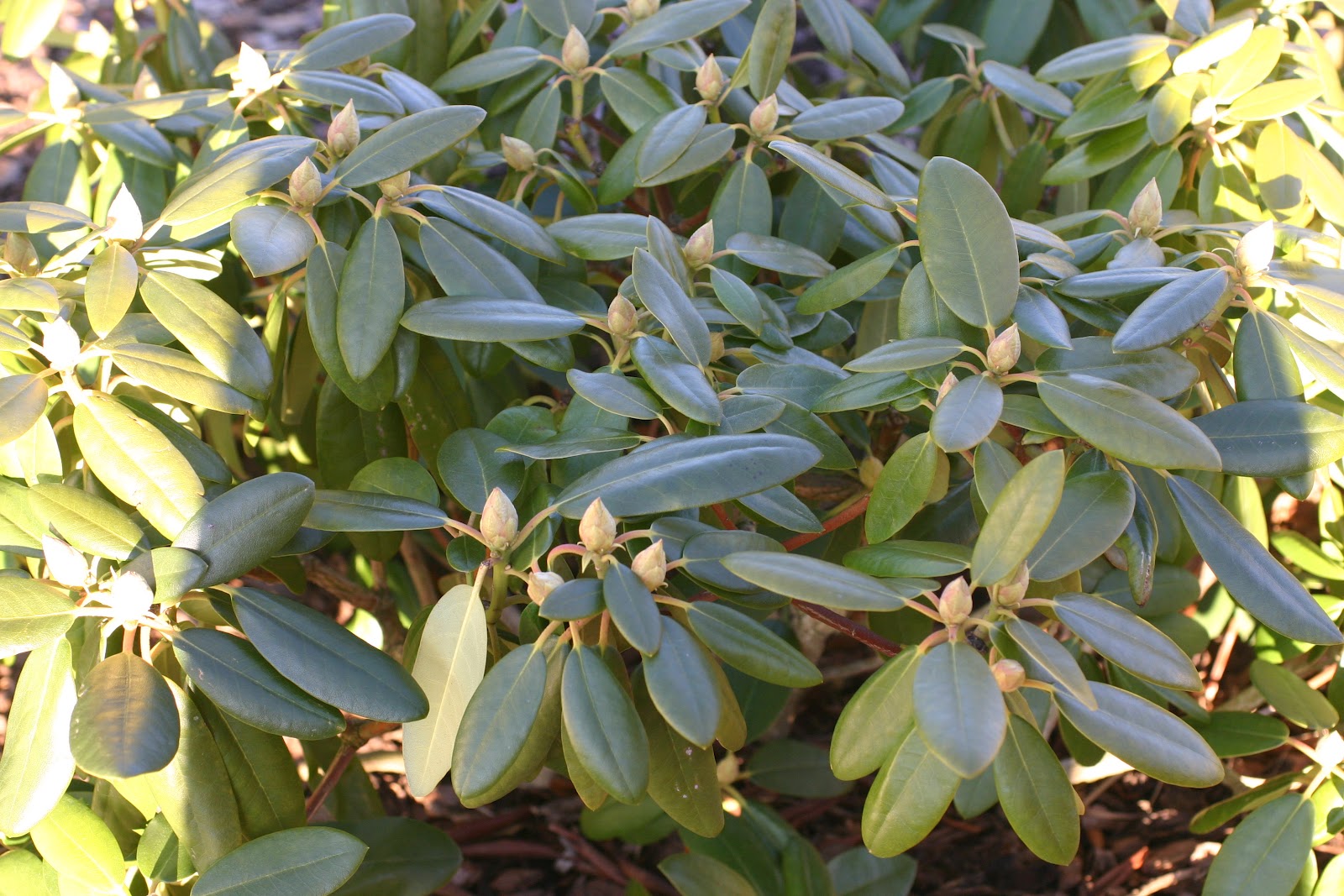
2012-04-14 Rhododendron catawbiense 'grandiflorum'
Sometimes the ground around you is just simply not good enough and you will stop growning. That is when you need to dig more and put more of the necessary soil around the roots and then it will start growning. This guy requires peat but was dug in too little hole with it. The rest around it was regular soil so it actually stopped growing. It was a pain to dig and stuff, but at the end of the story, when the whole work was done, it was worth it! Look at this rhododendron thrive.


2012-04-14 Azalea Japonica 'Rosalind'


And the Azalea is still around, even if it still is a little dry in some spots! The leaves are so beautiful because of the colour and of the shape!


2012-04-14 Some undefined rhododendron/Azalea


Very similar to these very small guys. I wish I know what sort these guys really belong to! I wonder how difficult it can be to actually tag them correctly before putting them on display... but, well, 'cheap' and 'beautiful' trumps the 'undefined' part of them.... It is the positive part of having a peat flower bed. You can find a lot of place for these kinds of plants!


2012-04-14 Magnolia Stellata


And finally, also the magnolia stellata survived it seems. And it seems it is even flowering in its first year! Crazy! I was expecting no flowers for years... Ok, let us admit, I was actually hoping for plenty of flowers the first year even though it was not really very realistic. Let us see how it looks like in a week or so!


2012-04-14 Cute magnolia tree?!


And sometimes things seem hopeless. You look at it and see no life. It seems there is nothing to do. You keep looking and looking... believe there is nothing to do. But truth is, as long as there is a good soil and good stable roots, they seem to make it at the end, even if the start is preeeetty slow! And when the sun shines again, then you know everything will be fine sooner or later! Let us hope sooner rather than later though... :O)


2012-04-14 Blueberries 'Goldtraube'


And sometimes, hard work brings its fruits: adding new fresh soil beds for good fruit! And here are some reasonable amounts of blueberries now on its way. Patience is very much required!!!!! But I do know they will be there sooner or later!


2012-04-14 Sea-buckthorn


These stingy ones are growing and growing for every year! Wonder really how big it will become! In their third year they are far taller than I am...;O)
Will they ever be able to cover the ugly thujas from the neighbour?!


2012-04-14  Physocarpus opulifolius  'Diable d'or'


At least at summer, we do know that these spireas are doing a great job at it! I do know it looks pretty tame right now! But I swear it will do its job in a month or so! Ok, maybe two.. I do not remember the exact timing for its flourishing right now!


2012-04-14 Lilacs


And also looking forward the lilacs to bloom. Their looks and their smell drive me crazy! Could sniff them non stop! Dear dear lilacs! To flower they will need some cow crap. Wish my daddy was here... He loves distributing cow crap... NOT... :O)


2012-04-14 Prune tree?!?!


Prunes anyone?! Or it might take some more years before the enjoyment comes?! That is the issue with new trees. They take ages to give fruits! Let us keep the bambies off this time!


2012-04-14 Professor Sprenger Flowering Crabapple


This apple tree won't give any edible apples but who cares: nobody in the household actually even likes apples from apple trees... But I would expect humongous amounts of flowers from it this year! Wonderful tree really it seemed in the plant nursery last year!


2012-04-14 Cornus Alba 'Elegantissima'


And the cornus alba is always late at start! And needs cow crap... Daddy?!?! Where are you when we need you the most... ?! :O) 


2012-04-14 Sambucus nigra 'Black Lace'


Or the Sambucus nigra 'Black Lace' that seems to become larger and larger. Last year all branches froze down and it had to start from scratch. It did reach well over my head during the last summer. And this year it seems to start from where it stopped growing last year. I guess, this plant is also going to become huge this year! 


2012-04-14 Rhubarb
And sometimes you do mistakes, you just don't dig enough. You have stones where you plant your plant. They will grow, but at some point, they will stop growing. Just like these rhubarb plants! Then you will have to do something radical. Take it out of its hole, and doing it you will sore its roots. And you feel "oh my dear God, what have I done", "How could I ever cultivate something with all those stones..." and swear you'll never do it again. You are scared it will not make it, but see here! 


It will need some serious amount of cow crap to be able to give at its full potential. Daddy?! Where are you?!?!
2012-04-14 Acer palmatum 'Bloodgood'


And here again... When all hope was nearly gone and I thought this little tree won't make it, here it goes! But now! Let us not forget to water it next time!!!! It does need continuous amounts of water I would believe! Maybe some cow crap?!?! Acer palmatum 'Bloodgood' should be growing 1-2 meters I believe!


2012-04-14
 

And there are plants that seem to grow in Winter... Do they really or is it just a feeling?!


And once again, no matter how hopeless it seems when you see everything around you is dry and has no sign of life. You do know that as long as you have good roots and soil, watering and fertilizing will repair it all. Sometimes you need to do a big effort to repair rookie mistakes, but they will be worth it! You do know that sooner or later it will start blooming again. It was a long Winter, but now the early Spring is here.


And soon the blooming part of Spring will be here, too! Bigger and greater than ever before!
 

tisdag 20 december 2011

Just a regular Scandinavian December...

Over a week ago, my daddy published some images taken at the beginning of December in their Italian garden picturing some roses that were blooming. It sounded quite weird to me... but thinking back I realized I had seen some white spots in the area around my roses. So last Sunday, I just confronted the weather and under the wet snow, I went exploring the garden to spot if I had been imagining stuff...
And I was indeed not! There were roses, white roses in full bloom. Slightly covered by the light snow!

18/12-2011


 It was my new beloved rose Thérèse de Lisieux purchased during last Spring from a French mail order company.
18/12-2011

So isn't nature beautiful? This is just one more typical Swedish December I guess... ;O) Or is it a French rose that believes it is still at home?! Just really hope they will survive the Swedish winter, really!


måndag 29 augusti 2011

Rhododendron Catawbiense 'Grandiflorum'

Latin: Rhododendron Catawbiense 'Grandiflorum'
Swedish: Parkrododendron
English: Rhododendron Catawbiense 'Grandiflorum'
Purchased at Plantagen quite a few years ago

7/6-2011

This plant requires sour soil and is therefore to be planted in peat. At the beginning we actually dug a hole and filled it with peat only. Reading about this plant, you are supposed to really only have peat in the area.
7/6-2011
And the hole should also be rather large, otherwise the plant will grow well until the roots reach the "normal soil" and then stop feeling well. Which is more or less what happened here.

One other issue with this plant (and also this I found out the hard way) is that you really have to water it properly in Spring time. Being an evergreen plant that never looses its leaves, it has quite a large area (all the leaves) to evaporate water through. When it is not humid in the ground and maybe also is rather frozen in the soil, the sun will burn the leaves and for that matter also the blossoms/potential blossoms.
This year only a few rather small blossoms bloomed. But it was never how it should be. This is when the shrub had its maximum period of flowering this Spring. Not much indeed.
31/5-2011
I will try again next year with watering at an earlier stage of the Spring. A lot of sources recommend covering the leaves with tissue to avoid evaporation. I personally do not feel it looks very good so I do hope watering will do it.

2/7-2011
This year we have actually refurbished the area around the rhododendron as we felt it was not very practical as it was. The grass (especially the couch grass) could not keep away and grew in together with the plant all the time. In a few days after removal, it was there again. Furthermore, it is said that grass takes away nutrition from the plant itself. So we decided to do a whole flower bed for peat plants. We removed a whole deal of ground and refilled it with peat. The plant seems to have recharged its powers since then. Maybe with good watering, we'll have some enjoyable blooming next year?!

Producer's information
Normal watering and fertilizing
Distance to other plants: 3m
Height: 2,5m
Prefers half shady to shady location.
Blooms in May-June
Winter hardy up to Swedish zone 5

torsdag 21 juli 2011

Blueberry bed

Some basics about American blueberries
  • They need peat to grow and don't like regular garden soil so you need to change the soil where you want them to grow
  • They like to be watered regularly
  • You need more than one plant to get berries as they are not self-fertile.
  • Blueberries grow on (at least) last year's wood
  • They are pretty much liked by bunnies and bambies... which does not go together with the fact that blueberries don't grow on the growth of the current year. If you can, just keep away those nosy animals from the plants with a net or similar wintertime.
The blueberry bed
This is our newly furbished blueberry bed. I do expect it to give us blueberries in large amounts by one year or two. Right now, it is mostly one of the plants that make sure we do not go hungry... :O)


The construction
The construction was at the end the following: Dug about 10cm over the board. Dug also for the new blueberries more in depth (around 30cm). Also we dug for a future grape plant in the right corner.
The area was then covered with peat.
We installed an automatic watering system where a hose goes along the back of the bed and hoses are then drawn from there to each and every blueberry shrub. The main hose is without holes, but for each plant, there is a "hole" hose for water distribution.
This whole bed was then covered with wheed  fabric to avoid weed coming from the ground itself. This action payed out for this year. It might create issues later but that I do not care about now. Right now, it is indeed keeping weed to grow there. We finalized the construction by covering the fabric with bark.
As you see, it looks little "empty" right now, but I expect the plants to grow with the years.
The edges were a little of a problem: the original idea was to actually use concrete to define the edges clearly. I realized it would imply a great deal of work and cost to do so. So what we did at the end was to border the bed with bark only and have fabric under it. The automatic lawn mower should be able to go over the edges and cut all grass completely. Let us see how this works.

The Scheme
The blueberry plants we have now are:
Vaccinum corymbosum 'Goldtraube'
Vaccinum corymbosum 'Elisabeth'
Vaccinum corymbosum 'North Country'
Vaccinum corymbosum 'Northblue'
Vaccinum corymbosum 'Darrow' 

This is the "map of blueberries".


Historical background
We started out with three blueberry plants quite a few years ago. We dug holes in the grass. This is how they looked in May 2007, when we first planted them.
May 2007
Fact is, the grass and weeds just grew into the plants and they were very hard to remove. To be honest, it was a real pain in the cakehole....
Blueberries are one of the best plants to have in the garden. They give good and healthy fruits (or so we hope... ;O) ). Even though you might think 3 blueberry plants give enough blueberries for the whole family, I personally wanted more. So I convinced Janne to purchase 2 more. But digging two more holes did not sound very attractive and the idea of skipping the grass between them seemed like a good idea. We were going to build a bed for the blueberries.
We actually hired a guy to do the digging. Quite a few stones had to be eliminated from the area.
May 2011

After a lot of discussions with the idiot we hired, and a lot of back and forth and tough work from our side, we managed to get up the bed as we intended it from the first beginning: with a lot of peat and over the grass level. This is the result after altering back and forth.

Vaccinum corymbosum 'North country'


Highly recommended plant of blueberries!!!! Sweet and large berries!

Latin: Vaccinum corymbosum 'North country' 

Swedish: Amerikansk blåbär 'North country'
English: American blueberries 'North country'
Purchased at Plantagen (I believe) a few years ago


Of the three blueberry plants we first purchased, this is the one that we highly recommend.
It gives very large amounts of blueberries. Very good ones: sweet and large (up to 2 cm). Here you can see a few, not completely ripe ones. When they are ripe, they are larger.
21/7-2011

Also this year, where the other two plants hardly gave results (especially Elisabeth), this one did not have any whatsoever issues. We are enjoying large amounts of blueberries.
2011-08-07: We have been picking good bunches of blueberries nearly every day for over a month now. Really incredible. Hard to understand where they all come from. And there are much more to come it seems.
26/7-2011

It is also the first plant to give blueberries, starting out in the beginning of July. According to the producer's description, it says "august-september". I do not see this to be true. Maybe we got the wrong "name tag"? :O)
It is also has a nice rounded shape that makes it rather decorative.
According to the producer, it should survive up to Swedish zone 5.

Planted in the blueberry bed.

Vaccinum corymbosum 'Elisabeth'

Latin: Vaccinum corymbosum 'Elisabeth'
Swedish: Amerikans blåbär 'Elisabeth'
English: American blueberries 'Elisabeth'
Purchased at Plantagen (I believe) a few years ago

2/7-2011
This is the latest of the three blueberry plants we purchased at the same time. When all other plants have no blueberries left, then this one starts producing a few, not very sweet but still tasty blueberries.
Though, this plant has never really grown to reasonable size and it has not either given a reasonable amount of blueberries. Summarizing, it has been the least productive of all blueberries.

My theory was, we probably got tired of digging and did a too little whole for it. Which might have caused the bad growth. Now we did a new peat bed, and if it had potential and my theory was correct, we'll notice the coming years. Otherwise, we'll have to be ok with the limited amounts of blueberries it gives.

Planted in the blueberry bed.

Vaccinum corymbosum 'Goldtraube'

Latin: Vaccinum corymbosum 'Goldtraube'
Swedish: Amerikans blåbär 'Goldtraube'
English: American blueberries 'Goldtraube'
Purchased at Plantagen (I believe) a few years ago

This blueberry was the one that has actually grown the most. At least in size.
26/7-2011 (sorry about the incredibly ugly tujas behind.... they are the neighbour's.... :O( )
In previous years, it has also given quite a few blueberries. It was the middle blueberry plant, starting to give blueberries somewhere end of July, beginning of August, if I remember it correctly. They are not as sweet as the ones from North country though.

This year we wanted to have more blueberries so we did a whole peat bed around the plant. So hopefully, it will grow more given the additional space for the roots and the fact that it will not have grass and weeds growing around (and into) it.

Producer's instructions
Water normally. Fertilize normally. Should be placed in a sunny position. It will reach a height and width of 1 meter. Tolerates Swedish zone 4

Ligustrum vulg. 'Atrovirens'

Latin: Ligustrum vulg. 'Atrovirens'
Swedish: Vintergrön liguster
English: Evergreen privet
Purchased after moving in (no dates available)

My idea was to have formed plants. In my imagination, I would cut these plants as mushrooms or balls. I wanted 3 mushrooms in different sizes. As I personally feel buxus stinks (litterally!), I decided evergreen privet would be the solution: evergreen and formable.
I wanted them in my Zen area. With stones. Calm.
I read somewhere that you can form balls easier and quicker by purchasing 3 plants and put them very next to each other and cut them into one ball.
We purchased the cheapest evergreen privets in a pack of ten. One more than needed as I wanted 3 mushrooms.
We planted them all anyways. Here you can see two of the future mashrooms...


To clarify reality: they might be called evergreen, but they do loose all their leaves during winter and the branches froze down all winters since we planted them. In Spring, it takes a while for them to come back to life. At least one of them has died completely. So the picture above represents pretty much the way they look in Spring.
30/12-2009
And if you need any proof that they are not winter green, here you are....
Their size is therefore pretty limited as they freeze back each winter.

Anyways, this is how they look now.

We have managed to put stones around two of them. The other one is on the "flower bed side". Note to myself: the area surrounding these shrubs is no good soil. It was the one that has always been there the last years without any improvement at all. Maybe not a good idea to plant stuff around there. Anyways one more thought might be to refine the distribution of stones around it as the black tissue below is very much visible as of now!

Azalea japonica 'Rosalind'

7/6-2009
We purchased this plant a few years ago. It was in flower when we purchased it and we were very much in love with the "strong" color it had. But the actual charmer were the leaves: rounded form with a green/yellow colour that turns into orange in Automn. It did not fit in in the rest of the garden, but we did not care. We purchased it anyway and put it next to the rhododendrons. It felt right to keep the plants that need peat in one locations.

Everything was fine, until the first really cold winter came in 2009-2010. Then it looked like it had died. It looked dry and hopeless in spring. After a few months, some few greenish leaves became visible and we realised, it had made it. Some branches gave a few flowers, too. The rest got flower mummies (rather cute, but I think they were actually sick or at least impested with undesired fungus. I do not know. We did though not have the heart to throw the poor plant away.
Winter 2010-2011 was as cold and the plant did not do so well either. In spring I removed all flower mummies and somewhat it seemed to get some of its greens back. A few flowers were there, too. Keep it or through it away?!
21/5-2011
Right now, we took it into consideration when "refurbishing" in the garden. But worst case scenario, we'll have to find a substitute for it. Not completely impossible either... :O)
On the other hand, we did not follow the instructions very carefully. E.g. we did not ever remove the faded flowers.

Producer's description
Soak plant in water before planting. Dig hole of twice the width and depth of the ball. Insert plant and fill up with soil. Water well after planting.
Care/cutting: To support flowering of the next year, carefully remove faded flowers.
Flowering time: May/June, pure pink with fine red blotches.
Growth/size: Upright growing, 80cm high and 120cm wide.
Position: Light shade, loose, humus-rich, moist, but well drained soil
Fertilization/nutrition: Use customary commercial fertilizers (few calcareous) in spring and summer.
Hardyness: Frost tolerant (Deb's note: not really true! It did take serious damage each cold winter)

tisdag 21 juni 2011

Vaccinium corymbosum 'Darrow'

Latin: Vaccinium corymbosum 'Darrow'
Swedish: Amerikanska blåbär 'Darrow'
English: Swamp blueberries 'Darrow'

26/7-2011
Purchased on the internet via www.graines-baumaux.fr around March 2011. Received the plant somewhere in March but I could not plant it outside before we got our flower beds enlarged. That was guessingly something around 31st May or 1st of June. But it could as well have been one week after. Unsure right now. By that time the plant had started loosing all flowers and no real blueberries were left on the plant. The plant itself had started looking like crap also.
7/8-2011: The plant has come back to full color, which is a good sign, but still does not have the harmonious form I wish it had....

Producer's description
The production of blueberries is distributed during 6 to 8 weeks. American variety with large fruits of good quality, sweet and aromatic. Very productive, with production between 15th of July to the 15th of September.


Sun to half sun
Flowering time: April-May
Harvest: July and August
Height: 1,25cm
Pruning: Not recommended

Planted in the blueberry bed.

måndag 6 juni 2011

American Blueberries 'Northblue'

Latin: Vaccinium corymbosum (x angustifolium) 'Northblue'
Swedish: Amerikanska blåbär 'Northblue'
English: Swamp Blueberries 'Northblue'

2/7-2011
Received the plant somewhere in March but I could not plant it outside before we got our flower beds enlarged. That was guessingly something around 31st May or 1st of June. But it could as well have been one week after. Unsure right now. By that time the plant had started loosing all flowers and no real blueberries were left on the plant. The plant itself had started looking like crap also.

Producer's description
Small plant of about 60cmn, it gives a lot of flowers in the spring and later round and light blue fruits with a diameter of about 2cm. The fruits are sweet and with aromatic. This variety is fitted for heights.

Additionally, the sticker I got from the producer says the following:
Height: 1,25cm (not 60 as above) -
Flowering time: April-May
Harvest: July and August
Pruning: Not recommended

Unclear what information is the correct one. Well, this we will know in a couple of years if no dumb rabbits or bambies come around before I guess?! Maybe something went wrong in the order. In the catalogue it says (x angustifolium and 60cm, but none of these two statements can be found on the etiquette. Probably got the wrong sort?)

Planted in the blueberry bed.